

Bringing a Bengal cat into your home is like inviting a piece of the jungle into your living room. Their stunning rosettes, glittered pelts, and athletic prowess are breathtaking, but these traits come with a distinct personality feature that every owner must respect: an exceptionally high prey drive. While all domestic cats are natural predators, the Bengal—with its direct lineage to the Asian Leopard Cat—possesses a hunting instinct that is often sharper, more persistent, and more energetic than the average house cat.
For many owners, this intelligence and activity level is exactly why they love the breed. However, for the local bird population, backyard wildlife, and small household pets like hamsters or parakeets, a Bengal can be a serious threat. Being a responsible Bengal owner means finding the balance between honoring your cat’s wild heritage and protecting the vulnerable creatures around them.
Understanding the Bengal Instinct

#image_title
To effectively manage your cat’s behavior, you first need to understand the source of their drive. Bengals are not “mean” or “aggressive” when they hunt; they are fulfilling a biological imperative. Their ancestors, the Asian Leopard Cats, are small, solitary hunters native to the forests of Asia. They survive by being hyper-aware of movement and possessing the agility to snatch birds from the air or fish from a stream.
When your Bengal chatters at a squirrel through the window or obsessively stalks a feather toy, they are displaying that same ancestral wiring. Because Bengals are high-energy and highly intelligent, they require more stimulation than other breeds. If they don’t get an outlet for this energy, they will create one—often at the expense of a local robin or your child’s pet gerbil.
The Great Indoors: The First Line of Defense
The single most effective method for protecting wildlife is simple: keep your Bengal indoors.
Conservation groups and veterinarians widely agree that keeping cats inside extends their lifespan and drastically reduces the impact on local ecosystems. For Bengals, who are prone to wandering further than the average tabby due to their confidence and curiosity, the outdoors poses risks of theft, accidents, and disease. Conversely, an outdoor Bengal poses a significant risk to biodiversity.
However, Bengals can easily become bored indoors. To make this lifestyle successful, you must view your home through the eyes of a predator.
- Vertical Space: Bengals need to climb. Install high shelving, cat trees that reach the ceiling, and perches that allow them to survey their “territory” from above.
- Window Perches: Give them a view of the world. This is often called “Cat TV.” However, be mindful that if a bird feeder is placed directly against the glass, it may cause “barrier frustration,” where the cat becomes agitated that it cannot reach the prey. Placing feeders a short distance away usually allows for observation without excessive frustration.
Safe Outdoor Access: Catios and Leashes
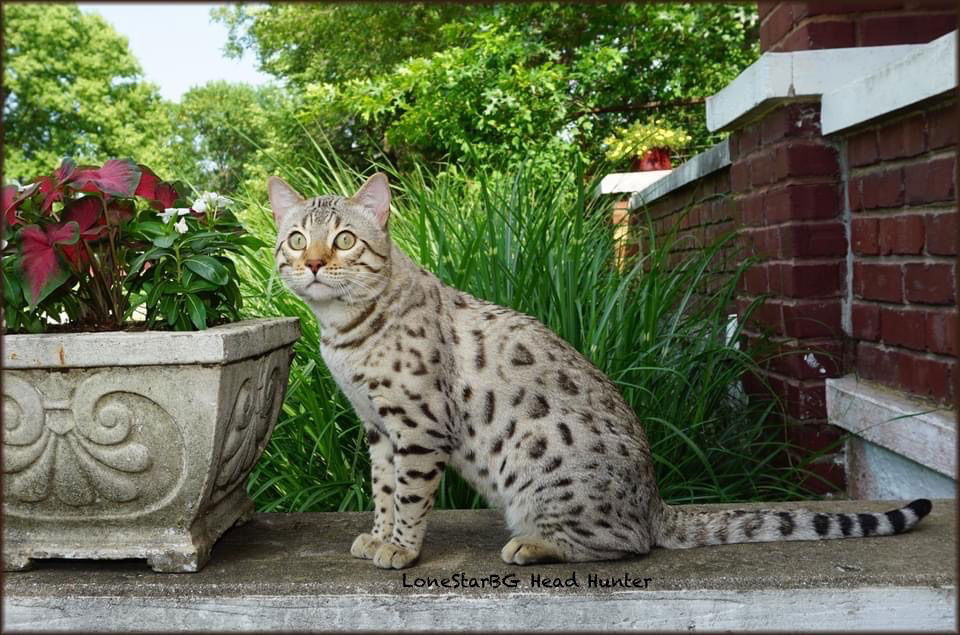
Just because your Bengal shouldn’t roam free doesn’t mean they can’t experience fresh air. “Controlled freedom” is the gold standard for managing high-energy breeds.
The “Catio” Solution
A catio (cat patio) is a screened-in enclosure that allows your Bengal to experience the sights, smells, and sounds of nature without being able to interact with it physically.
- Safety Mesh: Ensure the screening is heavy-duty. Standard window screens often cannot withstand the claws of a determined Bengal who spots a chipmunk. Use galvanized steel mesh or pet-proof screening.
- Double Entry: Ideally, a catio should have a double-door system or a tunnel connecting to a window, ensuring the cat cannot bolt past you into the open yard.
Leash Training
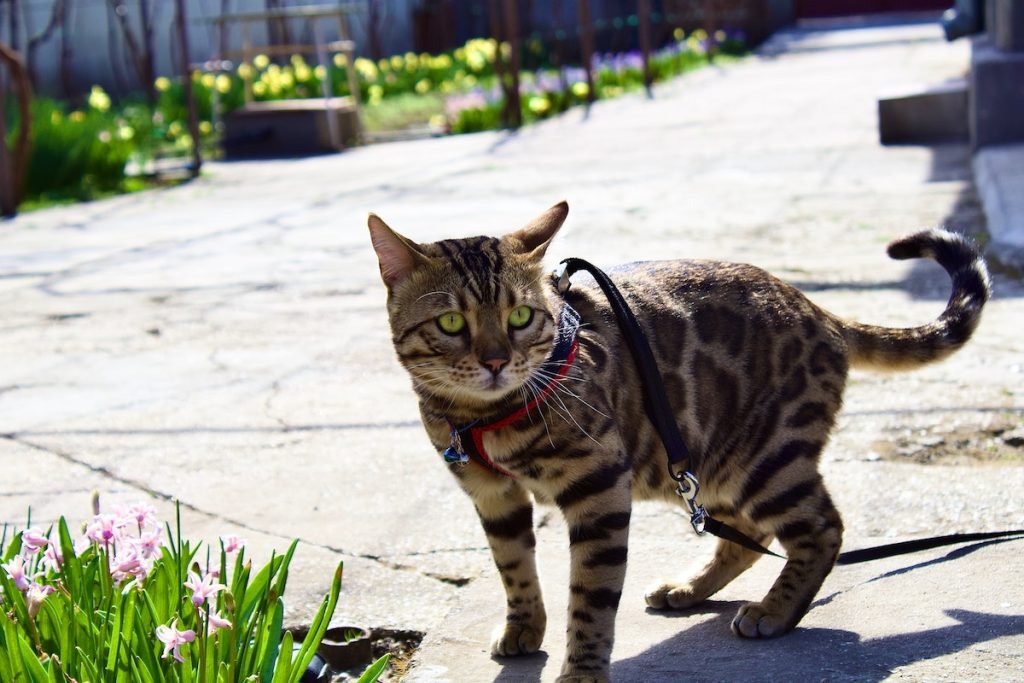
Bengals take to harnesses better than almost any other breed. Walking your Bengal allows them to burn off mental and physical energy. However, you must remain vigilant.
- The “Leave It” Command: While difficult, it is possible to train cats to respond to basic commands. If your Bengal locks eyes on a bird, having a distraction technique or a command to break their focus is vital.
- Physical Control: Always use a non-retractable leash. If a Bengal decides to launch at a squirrel, they are incredibly strong for their size. A fixed-length leash gives you the control needed to prevent a strike.
Protecting Small Household Pets
If you are a multi-species household, managing a Bengal requires strict protocols. Unlike a low-energy Persian who might ignore a hamster cage, a Bengal will likely view a cage as a puzzle to be solved.
The “Two-Door” Rule
Never rely on a single barrier between a Bengal and a prey animal (birds, rodents, reptiles, or fish).
- Dedicated Rooms: Keep small pets in a dedicated room that is a “cat-free zone.”
- Airlocks: If possible, ensure there is a two-door buffer. For example, the hamster is in the bedroom, and the door is shut. Even if the cat slips into the hallway, the bedroom door remains a second barrier.
Fortifying Enclosures
If a dedicated room isn’t possible, the enclosure itself must be Bengal-proof.
- Weighted Lids: Aquarium lids must be weighted or clipped down. Bengals love water and are known to go fishing. A simple resting lid is not enough; a Bengal can lift it.
- Cage Locks: Simple sliding latches on bird cages are child’s play for a Bengal’s dexterous paws. Use carabiners or padlocks to secure cage doors.
- Visual Barriers: Stress can be fatal to small animals. Even if the Bengal cannot get in, the sight of a predator staring at them can cause heart failure in sensitive species like rabbits or budgies. Cover the sides of cages or place them high enough that the cat cannot stare directly into them at close range.
Satisfaction Without the Kill: Play Therapy
You cannot suppress the prey drive, but you can redirect it. This is the concept of “Play Therapy.” You must provide an outlet for the Stalk, Chase, Pounce, Kill sequence that doesn’t involve living creatures.
Interactive Play
Leaving a toy mouse on the floor is not hunting. You must be the prey.
- Wand Toys: Use feather wands (like Da Bird) to mimic the flight patterns of a bird or the scuttling of a mouse. Make the toy hide behind the sofa, pause, and then run.
- The “Kill” Bite: Allow the cat to catch the toy periodically. If they chase forever without a catch, they get frustrated. Once they catch it, let them “kill” it (bite and kick).
Food Puzzles and Foraging
In the wild, a cat hunts for its meals. In your home, a bowl of kibble is boring.
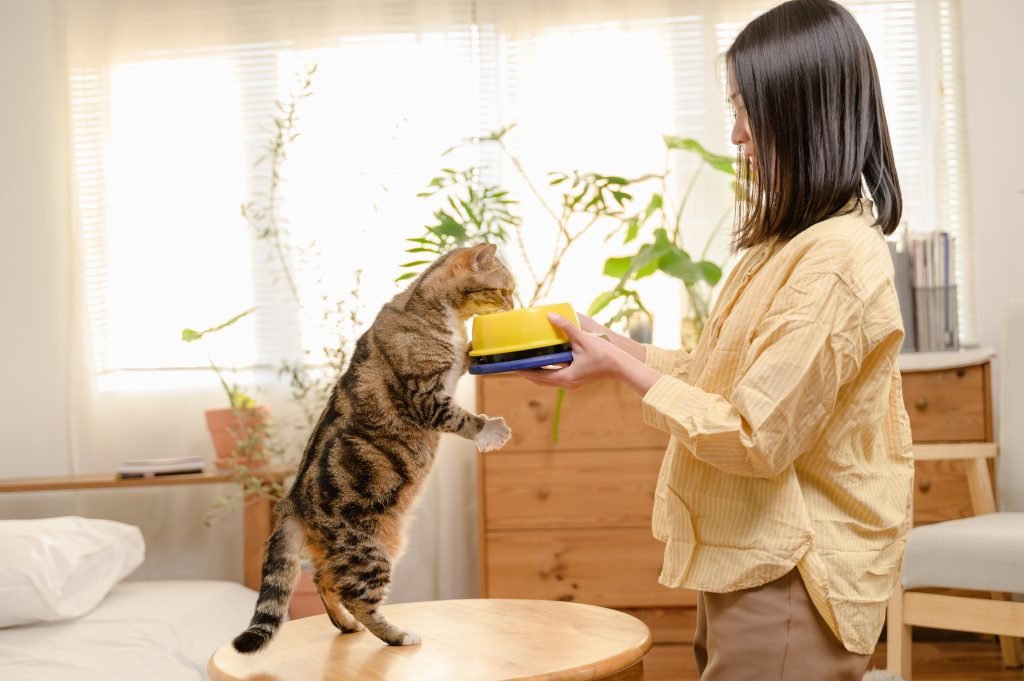
- Puzzle Feeders: Make them work for their food. This engages the problem-solving part of their brain that they would otherwise use to figure out how to open the canary cage.
- Hide and Seek: Hide treats around the house on shelves and cat trees. This encourages them to “patrol” their territory for food rather than prey.
The Bell Debate
If your Bengal does manage to escape outside, or if you are leash walking in an area with heavy wildlife, you might consider a bell.
- Effectiveness: Studies are mixed on whether bells actually save birds. Some cats learn to move so smoothly the bell doesn’t ring until it’s too late.
- Bibs and Collars: Brightly colored “cat bibs” are often more effective than bells. These neoprene flaps hang from the collar and interfere with the cat’s ability to pounce effectively, while the bright colors alert birds to their presence.
The Role of Neutering/Spaying
While this article focuses on training and management, biology plays a huge role. An unaltered cat has a much higher drive to roam, fight, and hunt. Spaying or neutering your Bengal is essential not just for population control, but to reduce the hormonal drive that pushes them to escape the house and prowl the neighborhood.
Responsible Guardianship
Owning a Bengal is a privilege that comes with a set of responsibilities different from owning a typical lap cat. Their high prey drive is not a defect; it is a feature of their magnificent genetics. By securing your home, supervising outdoor time, and providing intense, frequent play sessions, you can satisfy your Bengal’s inner tiger without endangering the local wildlife or your other pets.
It requires effort, vigilance, and creativity, but the reward is a happy, healthy Bengal and a safe environment for all creatures, big and small.
Interested in Adding a Bengal to Your Family?
If you are ready to bring the beauty and dynamic personality of a Bengal into your home, it is crucial to work with a breeder who prioritizes health, temperament, and education. Lone Star Bengal Cats & Kittens can help guide you through the process of finding the perfect companion. For inquiries, you can reach out to Marla at 817-602-4807 or email marla@lonestarbengals.com.
